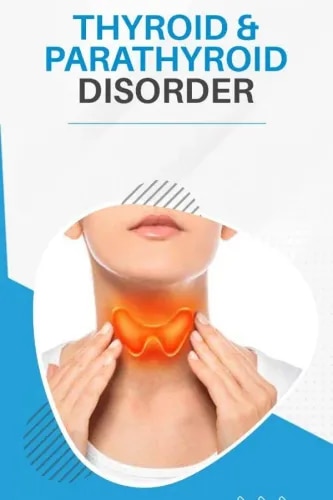
Thyroid and Parathyroid Disorders
Thyroid and parathyroid disorders involve the dysfunction of the glands responsible for regulating various bodily functions, including metabolism, calcium balance, and bone health.
Thyroid Disorders
The thyroid gland is located in the front of the neck and produces hormones that regulate metabolism. Disorders of the thyroid can lead to an overactive or underactive thyroid.
1. Hypothyroidism (Underactive Thyroid):
Cause: Common causes include Hashimoto's thyroiditis (an autoimmune condition), iodine deficiency, or thyroid surgery.
Symptoms: Fatigue, weight gain, cold intolerance, constipation, dry skin, depression, and slow heart rate.
Diagnosis: Blood tests measuring thyroid-stimulating hormone (TSH) and free thyroxine (T4).
Treatment: Synthetic thyroid hormone replacement (levothyroxine).
2. Hyperthyroidism (Overactive Thyroid):
Cause: Often caused by Graves' disease (an autoimmune disorder), toxic nodular goiter, or thyroiditis.
Symptoms: Weight loss, rapid heartbeat, anxiety, tremors, heat intolerance, and excessive sweating.
Diagnosis: Blood tests showing low TSH levels and elevated T4 and T3 levels.
Treatment: Antithyroid medications (e.g., methimazole), radioactive iodine therapy, or thyroidectomy.
3. Thyroid Nodules:
Cause: Can arise due to benign growths, cysts, or in rare cases, thyroid cancer.
Symptoms: Often asymptomatic but may present as a visible lump in the neck or cause difficulty swallowing or breathing.
Diagnosis: Ultrasound, biopsy, and sometimes thyroid scans.
Treatment: Monitoring, fine needle aspiration, or surgery if cancer is suspected.
4. Thyroid Cancer:
Cause: Risk factors include radiation exposure and family history.
Symptoms: Lump in the neck, hoarseness, difficulty swallowing, and swollen lymph nodes.
Diagnosis: Biopsy, ultrasound, and thyroid scans.
Treatment: Surgery (thyroidectomy), radioactive iodine therapy, and sometimes thyroid hormone therapy.
Parathyroid Disorders
The parathyroid glands are small glands located behind the thyroid. They regulate calcium levels in the body by producing parathyroid hormone (PTH).
1. Hyperparathyroidism (Overactive Parathyroids):
Cause: Most commonly caused by benign tumors called parathyroid adenomas. Other causes can include hyperplasia (enlargement) of the parathyroid glands or, less frequently, parathyroid cancer.
Symptoms: Fatigue, depression, bone pain, kidney stones, abdominal pain, and muscle weakness.
Diagnosis: Blood tests showing elevated calcium and PTH levels, and imaging studies to locate the abnormal gland(s).
Treatment: Surgery to remove the overactive parathyroid gland(s) is typically the primary treatment.
2. Hypoparathyroidism (Underactive Parathyroids):
Cause: Most commonly a result of surgery on the thyroid or parathyroids, autoimmune diseases, or genetic disorders.
Symptoms: Tingling or numbness around the mouth, hands, and feet, muscle cramps, and seizures.
Diagnosis: Blood tests showing low calcium and PTH levels.
Treatment: Calcium and vitamin D supplementation, and sometimes synthetic PTH.
Both thyroid and parathyroid disorders require careful diagnosis and management, typically involving blood tests, imaging, and sometimes surgery. If you suspect a thyroid or parathyroid issue, it’s important to consult a healthcare provider for evaluation and treatment.