
Age alone does not rule out laser treatment for an anal fistula, but frailty, continence, medical conditions, medicines and the fistula’s route through the sphincter can change the safest choice. By the end, you will know which assessments to request, when laser closure is unsuitable, and which questions to ask before choosing a surgeon or hospital.
Key takeaways
- Age alone does not exclude laser fistula treatment.
- Check frailty, anaesthesia risk, kidney function, diabetes and heart-lung stability.
- Map every fistula tract and its relationship to the anal sphincter first.
- Choose FiLaC only when its healing limits and follow-up plan are clear.
When can an older adult safely undergo laser fistula treatment?
Age alone does not rule out laser fistula treatment. An older adult is a reasonable candidate when frailty is limited, heart and lung conditions are stable, kidney function and diabetes are managed, and the person can tolerate anaesthesia and aftercare.
Fistula treatment for older adults depends more on health, function, fistula anatomy and home support than on the birth date.
Before agreeing to treatment, ask the surgical and anaesthesia teams to complete this checklist:
- Assess walking ability, falls risk, memory, delirium risk, sleep apnoea and help available with toileting, dressings and transport after discharge.
- Review heart disease, breathing problems, kidney disease, diabetes, steroid use and previous reactions to anaesthesia.
- Confirm the fistula’s course through examination and anoscopy or proctoscopy. Request pelvic MRI when the tract is high, recurrent, branching or suspected to form a horseshoe, and ask how much sphincter muscle it involves.
- Check for fever, increasing pain, swelling or a fluctuant abscess. An undrained cavity usually needs drainage or a seton before definitive closure.
- Bring every medicine list, especially warfarin, apixaban, rivaroxaban, aspirin and clopidogrel. Never stop these independently; obtain a written plan from the surgeon, anaesthetist and prescribing clinician.
- Record existing leakage of stool or gas and discuss alternatives. A low, simple tract may suit fistulotomy, while substantial sphincter involvement can favour a sphincter-preserving approach.
What must be mapped before choosing laser closure?
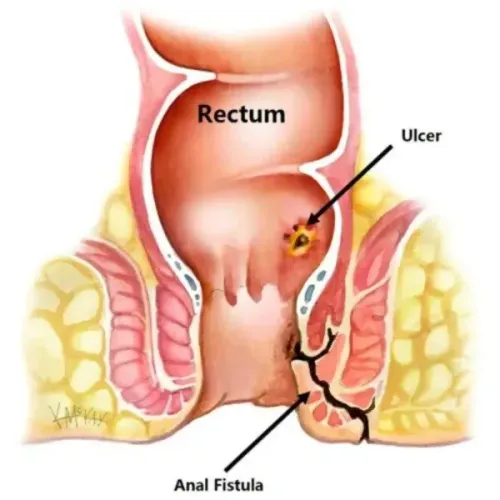
Laser is not chosen safely until the tract is mapped from skin opening to internal opening. A clinician examines the anus and perineum for external openings, tenderness, induration, discharge and a painful abscess.
Anoscopy or proctoscopy then inspects the anal canal and rectum for the internal opening; a missed opening is a common reason closure fails.
If pain, scarring or muscle spasm prevents a reliable examination, examination under anaesthesia allows careful inspection, gentle probing and drainage of any cavity. Pelvic MRI with a fistula protocol is particularly useful for recurrent, high or branching disease.
It can show side branches, horseshoe extensions, hidden abscesses and the tract’s relationship to the internal and external sphincters.
The map determines whether fistula treatment for older adults is a straightforward low-risk procedure or a staged plan. Ask the surgeon to show you the MRI images or operative findings and explain this classification before considering laser fistula surgery for elderly in Dombivli East.
| Type | What the map shows | Usual implication |
|---|---|---|
| Simple low | One tract, one internal opening, little sphincter involvement | Fistulotomy may offer a more established cure |
| High | Tract crosses substantial sphincter muscle | Sphincter-preserving treatment or staged drainage deserves discussion |
| Complex | Branches, horseshoe extension, abscess, recurrence or multiple openings | Treat infection and map every tract before closure |
A laser described as “sphincter-sparing” still fails if an abscess or side branch remains untreated.
How does FiLaC compare with fistulotomy, seton and other operations?
FiLaC preserves more sphincter muscle than fistulotomy, but the trade-off is less certain closure. For a simple, low fistula involving little muscle, fistulotomy often offers the most established cure; for a high or recurrent tract, dividing muscle can threaten continence, making a sphincter-preserving option more attractive.
| Option | Sphincter and recurrence | Procedures and healing | Wound care |
|---|---|---|---|
| FiLaC | Radial fibre closes the tract without deliberately cutting muscle; reported initial healing is roughly 50–70%, with recurrence possible. | Usually one planned procedure, but persistent drainage can require repeat FiLaC or another operation; recovery is often quicker than open division. | Small tract opening, drainage checks and hygiene; monitor for abscess or ongoing discharge. |
| Fistulotomy | Opens the entire tract; strongest fit for low fistulas, but cutting substantial muscle can affect continence. | Often one operation; the open wound heals gradually over several weeks. | Regular washing, dressings or gauze, and bowel-movement care are important. |
| Seton | A draining seton controls infection while protecting muscle; it usually does not cure the fistula alone. | Often a staged plan, followed by LIFT, flap, fistulotomy or another procedure; treatment takes longer. | Keep the loop clean and attend tightening, review or replacement appointments. |
| Advancement flap | Covers the internal opening while preserving muscle; recurrence remains possible. | One operation, though failure can lead to reoperation; healing is slower than a simple fistulotomy. | Protect the flap, manage stools and attend wound reviews. |
| LIFT | Divides the tract between sphincter muscles, limiting muscle injury; recurrence still occurs. | Usually one operation, with further treatment if it fails; healing is intermediate. | Wound hygiene and monitoring for discharge or infection are required. |
For fistula treatment for older adults, the best option also depends on continence, mobility, diabetes, blood thinners and the help available for wound care. Sphincter-sparing does not mean risk-free.
When is laser closure the wrong first step?
Immediate laser closure is the wrong first step when infection is active or the fistula’s full anatomy is unknown. A painful, fluctuant abscess needs incision and drainage; a radial laser fibre cannot empty a pus-filled cavity. Sealing the tract before controlling sepsis can leave infection trapped and cause early failure.
A loose seton keeps the tract open so infected fluid can drain while inflammation settles. A staged operation is safer when there is a large cavity, an undrained side branch, or a patient who needs time to recover before definitive treatment.
- Drain the abscess and treat active infection before considering closure.
- Review pelvic MRI and examination-under-anaesthesia findings for a branching, horseshoe or recurrent tract.
- Check for Crohn’s disease. Active rectal inflammation requires gastroenterology input, medical treatment and drainage; treating only the tunnel increases recurrence risk.
- Reconsider immediate laser closure when the tract crosses substantial sphincter muscle. A seton, LIFT, advancement flap or another sphincter-preserving staged plan may offer better protection of continence.
- Confirm that no cavity remains before proceeding. A search for “laser fistula surgery for elderly in Dombivli East” does not prove that laser suits your anatomy.
Repeated fistulas and branching tracts are harder to close from inside because hidden extensions can remain untreated. Ask the surgeon to explain why laser fistula surgery for elderly in Dombivli East is appropriate only after infection control, mapping and continence risks have been assessed.
How should you evaluate a local fistula specialist before deciding?
Do not choose a surgeon because “laser fistula surgery near me” produces a nearby clinic. Compare how the clinician investigates your fistula, explains alternatives, and manages risks after discharge.
1. Ask the anal fistula specialist in dombivli east to review your pelvic MRI with you, pointing out the internal opening, side branches, abscesses, and sphincter involvement. Ask whether examination under anaesthesia, anoscopy, or proctoscopy is needed if the map is uncertain.
2. Request a plain comparison of laser closure, fistulotomy, seton placement, LIFT, and an advancement flap. The recommendation should match a low simple tract, high tract, recurrent disease, or branching fistula—not a promise that laser is painless, scarless, or guaranteed.
3. Ask for the surgeon’s own healing, recurrence, and reoperation results for cases resembling yours. “Our hospital’s success rate” is not enough; ask how outcomes were measured and over what follow-up period.
4. For an older adult, discuss frailty, sleep apnoea, heart or lung disease, kidney function, delirium risk, mobility, and home assistance with the anaesthetist. Never stop warfarin, apixaban, aspirin, or another blood thinner without a written plan from the prescribing clinician.
Jeevanshree Hospital’s specialist surgical setting may suit this evaluation if the team coordinates MRI review, anaesthesia, alternatives, and follow-up rather than treating laser as the default. Before booking, confirm who answers urgent calls, manages wound care and constipation, and reviews you after discharge.
Related service
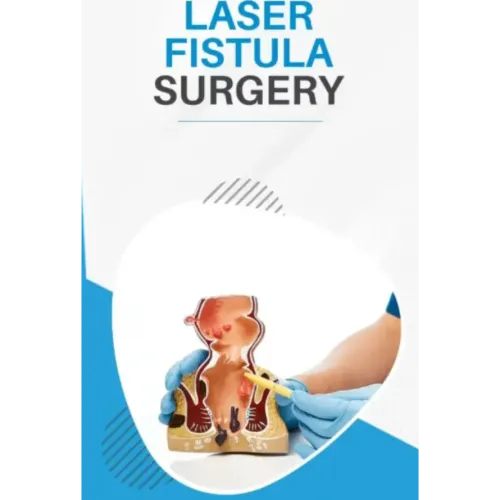
Laser Fistula Surgery also known as Laser Fistulotomy or Laser Ablation Of Fistula, is a minimally invasive surgical procedure used to treat anal fistulas. View service → |
Frequently asked questions
Can older adults safely undergo laser fistula treatment?
Yes, when frailty is limited, heart and lung conditions are stable, kidney function and diabetes are managed, and the person can tolerate anaesthesia and aftercare. Age alone does not rule it out.
What must be mapped before choosing FiLaC?
The surgeon must identify the external opening, internal opening, fistula tract, abscesses, branching tracts and relationship to the anal sphincter. Examination under anaesthesia and pelvic MRI may be needed.
How does FiLaC compare with fistulotomy and seton treatment?
FiLaC aims to close the tract while preserving sphincter muscle. Fistulotomy opens the tract and can provide reliable healing for suitable low fistulas but risks muscle injury when the tract crosses more sphincter. A seton drains infection or controls a complex tract and may be temporary or part of staged treatment.
When is laser closure the wrong first step?
Drain an abscess first. Treat active sepsis, an unlocated internal opening, complex branching disease or a fistula involving substantial sphincter muscle before considering laser closure.
How should you evaluate a local fistula specialist?
Ask how the tract will be mapped, how much sphincter it involves, why FiLaC suits your anatomy, what alternative operations are available, who provides anaesthesia, and how recurrence or failed closure will be managed.
Keywords