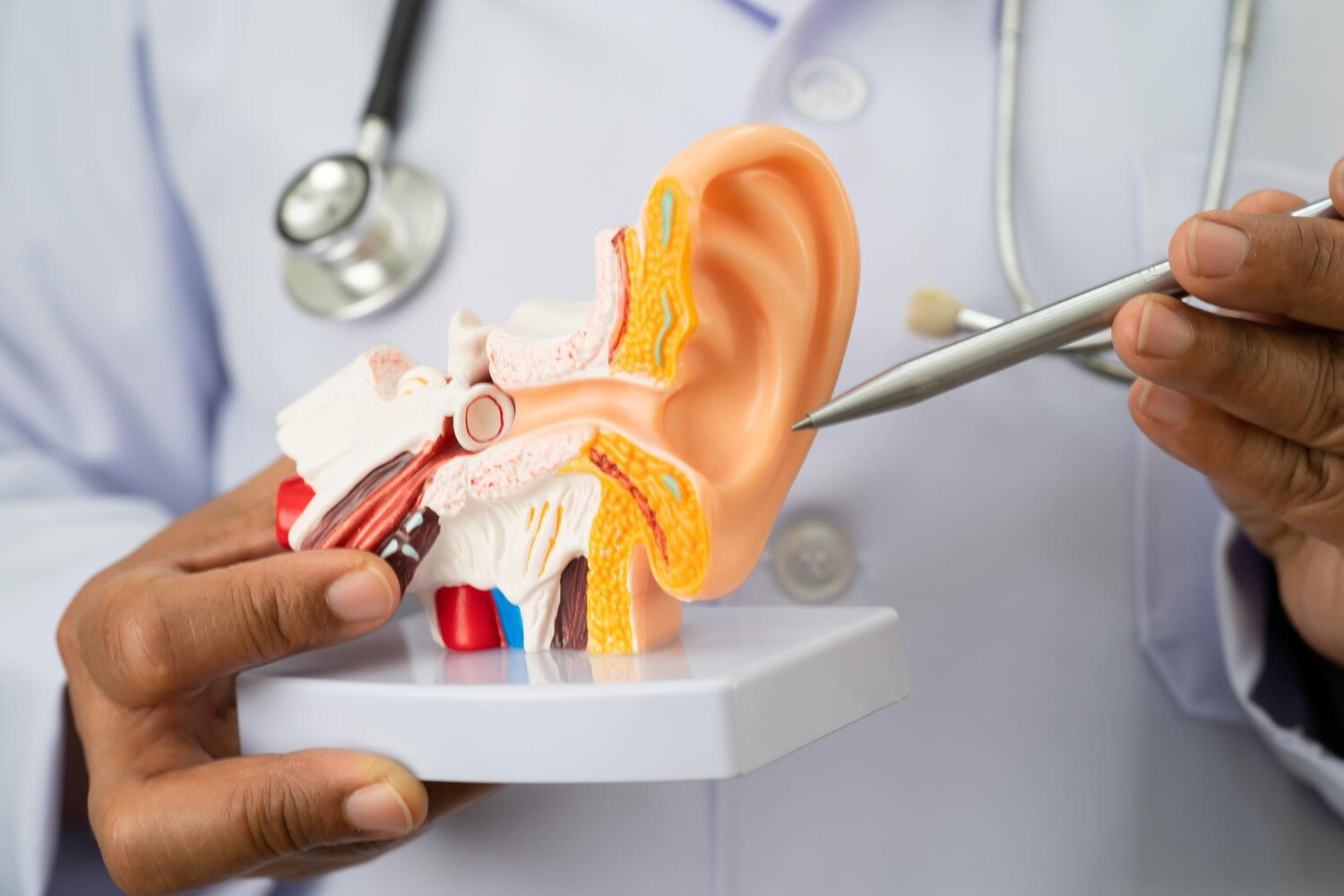
The hospital process begins before admission: an ENT specialist confirms the ear problem, checks whether surgery is the right treatment, and plans anaesthesia and follow-up. You will be able to understand each stage, compare a proposed operation with alternatives, prepare for discharge, and recognise when recovery needs urgent medical attention.
Key takeaways
- Audiometry and tympanometry help confirm the diagnosis before surgery.
- Bring your medication list and follow fasting instructions on operation day.
- The procedure varies for eardrum, middle-ear, mastoid, and hearing conditions.
- Ask about surgeon expertise, anaesthesia, infection control, and follow-up care.
What happens before microscopic ear surgery is scheduled?
An ENT clinician confirms the diagnosis before scheduling microscopic ear surgery for process in dombivli east. Examination with an otoscope or operating microscope checks the eardrum, ear canal, drainage, and middle-ear changes; pure-tone audiometry measures hearing thresholds, speech testing measures understanding, and tympanometry assesses middle-ear movement when useful.
Conductive hearing loss from a perforation, fluid, damaged ossicles, or other middle-ear disease may improve with surgery. Sensorineural loss from inner-ear or nerve damage usually does not. A CT scan is reserved for suspected cholesteatoma, mastoid disease, or complicated anatomy, not required for every eardrum repair.
| Type of finding | What it suggests | Possible plan |
|---|---|---|
| Conductive loss | Middle-ear sound transmission problem | Repair, reconstruction, or observation |
| Sensorineural loss | Inner-ear or nerve damage | Hearing rehabilitation or hearing aid |
| Cholesteatoma or mastoid disease | Destructive or infected tissue | CT review and disease-removal surgery |
Consent must name the exact operation, its purpose, expected hearing result, alternatives such as observation, medication, hearing aids, or another procedure, and diagnosis-specific risks including persistent perforation, infection, dizziness, tinnitus, taste change, hearing loss, or facial-nerve weakness.
Give the team your medication list, reports, and scans. Do not stop blood-thinning medicine without the prescribing clinician. Uncontrolled blood sugar, active infection, other illness, or anaesthesia concerns can delay surgery. Follow the fasting instructions, arrange transport and a responsible adult after anaesthesia, and plan time off work or school plus help at home.
Mild, stable symptoms may suit observation or hearing rehabilitation instead; the ENT clinician must confirm suitability.
What happens on the day of the ear operation?
Registration starts the day: staff verify your name, date of birth, operation, consent, and the ear to be treated, then mark or reconfirm that ear. Nurses record temperature, pulse, blood pressure, oxygen level, and other vital signs; they also review fasting, medicines, allergies, and last doses before you change into hospital clothing.
The anaesthetist checks your medical history and decides between general anaesthesia and local anaesthesia with sedation. General anaesthesia is common for extensive surgery and children. Selected adults having limited procedures may remain awake; you may hear drilling or other sounds and feel pressure or movement, but you should not feel sharp pain.
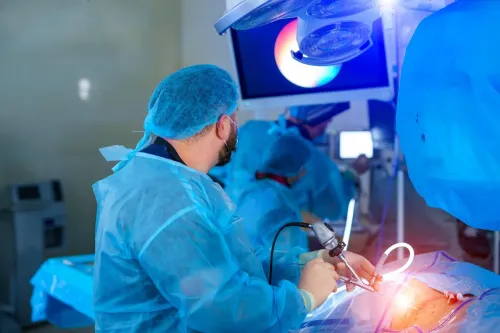
You lie in the required position while the team cleans the ear and surrounding skin, applies sterile drapes, and monitors oxygen level, blood pressure, heart rhythm, and breathing. The operating microscope provides binocular magnified vision and hands-free depth perception.
The surgeon may work through the ear canal or make an incision behind the ear, depending on the anatomy and disease.
| Visualisation | Strength | Limitation |
|---|---|---|
| Operating microscope | Magnified binocular view with depth perception | Access may require an incision behind the ear |
| Endoscope | Shows angled recesses through the ear canal | Does not automatically suit every operation |
“Microscopic” describes visualisation, not a small incision, bloodless surgery, outpatient treatment, short recovery, or guaranteed hearing improvement. Recovery-room observation and discharge depend on the operation, anaesthesia, nausea, medical conditions, and recovery. Limited procedures may be day-case; extensive surgery may need overnight observation.
These are practical ear surgery procedure in dombivli east and ear operation steps near dombivli questions to confirm with your ENT team.
How does the operation change with the ear diagnosis?
The diagnosis determines whether the surgeon repairs the eardrum, rebuilds sound transmission, removes disease, or treats the stapes. Microscopic surgery is an access method, not one standard operation.
1. Tympanoplasty repairs a perforated eardrum. The surgeon lifts the remaining eardrum, removes infected or damaged tissue when necessary, and places a temporalis fascia or cartilage graft through the ear canal or through an incision behind the ear. Persistent perforation, infection, altered taste, dizziness, tinnitus, or changed hearing are possible risks.
2. Ossiculoplasty rebuilds or replaces damaged middle-ear bones so sound can travel more effectively to the inner ear. The reconstruction may use the patient’s tissue or a prosthesis, but hearing improvement is not guaranteed when inner-ear damage also exists.
3. Mastoidectomy opens the mastoid air cells behind the ear and removes infected tissue or cholesteatoma. The surgeon works around the facial nerve, inner ear, and major blood vessels; extensive disease carries risks such as facial-nerve injury, dizziness, hearing change, and, rarely, a cerebrospinal-fluid leak.
4. Cholesteatoma removal may be combined with tympanoplasty or ossicular reconstruction. Cholesteatoma can recur, so further surgery and long-term examinations may be needed.
5. Stapes surgery treats otosclerosis by operating on the stapes region to improve sound transmission. Its risks differ from eardrum repair and include dizziness, altered hearing, tinnitus, and rare severe hearing loss.
At the end, absorbable material or temporary canal packing may support a graft and control bleeding. The aim may be a dry, safe ear rather than normal hearing; a hearing aid can still be necessary.
What is microscopic ear surgery recovery like after discharge?
Microscopic ear surgery recovery usually starts with a dressing or temporary canal packing. Packing supports the graft and controls bleeding, but it can cause fullness, drainage, reduced hearing, mild pain, tinnitus, altered taste, and temporary imbalance. Swelling and blocked hearing do not prove that the repair failed.
1. Take prescribed pain relief. Use ear drops or antibiotics only when the surgeon prescribes them. Protect any incision behind the ear from rubbing, pressure, and unapproved creams.
2. Keep water out of the operated ear until the surgeon confirms that the canal and eardrum have healed. Do not forcefully blow your nose; sneeze with your mouth open. Do not use cotton buds or unprescribed drops.
3. Attend follow-up visits for packing removal and wound checks. The skin incision can heal before hearing settles, so hearing is reassessed after healing, often several weeks later or longer. Improvement is not guaranteed, especially when inner-ear or nerve damage contributes to hearing loss.
4. Ask the surgeon when you can work, attend school, drive, exercise, fly, and swim. The timing depends on the operation, packing, anaesthesia, and your surgeon’s instructions.
Contact the surgical team urgently for heavy bleeding, fever, worsening severe pain, foul-smelling drainage, persistent vomiting, or severe or persistent vertigo. New or sudden facial weakness, or severe neurological symptoms, requires urgent medical assessment rather than waiting for a routine appointment.
How do you compare an ear surgery hospital in Dombivli?
Compare the facility, not its distance from your home. An ear surgery hospital Dombivli search should lead to verification, because proximity in Dombivli East does not prove surgical quality or outcomes.
| Check | Ask to verify | Why it matters |
|---|---|---|
| Site and surgeon | Consultation address, actual operating site, and the surgeon’s experience with your named operation | The clinic and theatre may be different |
| Equipment and safety | Audiology, imaging, operating microscope, anaesthesia support, infection-control arrangements, and emergency equipment | You need diagnosis, monitoring, and urgent care in the same pathway |
| Continuity | Postoperative contact number, follow-up availability, on-site care or referral arrangements, complication management, packing removal, and hearing-test scheduling | Delays after discharge can affect recovery |
Ask for a written quotation naming the surgeon, anaesthesia, theatre, medicines, tests, packing, admission, overnight stay, follow-up, and possible additional charges. Jeevanshree Hospital is one facility where you can ask these specific questions; its location alone does not establish suitability.
Plan for repeat visits, transport after anaesthesia, dressing care, temporary water and activity restrictions, time away from work or school, and help at home. Ask who will review you if pain, drainage, dizziness, or facial weakness develops after discharge.
An ENT consultation must confirm the diagnosis and plan. Ask:
- What is the diagnosis, and which operation is proposed?
- What alternatives exist, and what hearing result is realistic?
- Which anaesthesia and hospital stay are planned?
- Who handles emergencies and complications after discharge?
- What is the total cost, including possible additional charges?
- When can I fly, drive, exercise, and swim?
Related service
Ear Surgeries Exploring the world of ear surgeries: a comprehensive guide. Our sense of hearing is a precious gift that allows us to connect with the world around... View service → |
Frequently asked questions
What happens before microscopic ear surgery is scheduled?
The ENT clinician confirms the diagnosis with an ear examination and orders hearing tests such as pure-tone audiometry, speech testing, or tympanometry when useful.
What happens on the day of the ear operation?
The team verifies your identity, diagnosis, consent, medicines, allergies, and fasting status before anaesthesia and the planned ear procedure.
How does the operation change with the ear diagnosis?
The steps differ according to the problem, such as a damaged eardrum, middle-ear disease, mastoid infection, or a condition affecting hearing.
What is microscopic ear surgery recovery like after discharge?
Recovery includes protecting the ear, using prescribed medicines, attending follow-up visits, and watching for worsening pain, fever, discharge, dizziness, or hearing changes.
How do you compare an ear surgery hospital in Dombivli?
Compare ENT surgeon experience, diagnostic testing, anaesthesia support, operating-room safety, emergency access, infection-control practices, and scheduled follow-up.
Keywords