Accidentally swallowing a foreign object can range from a minor incident to a medical emergency. The appropriate response depends on what was swallowed, its size and shape, where it is located, the patient's age and whether symptoms such as pain or difficulty swallowing are present.
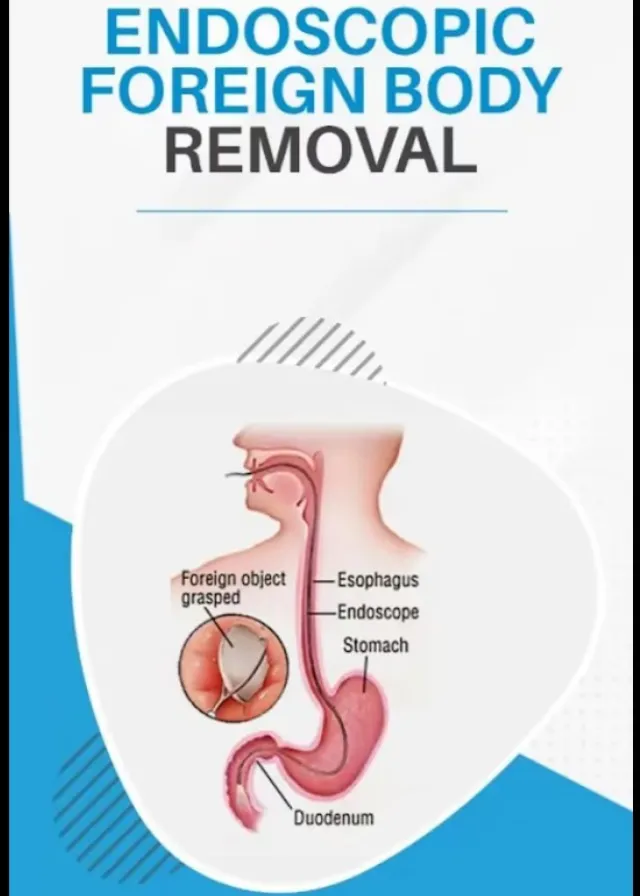
Endoscopic Foreign Body Removal is a procedure that allows a doctor to locate and, in suitable cases, retrieve an object from the upper gastrointestinal tract without conventional open surgery.
At Jeevanshree Hospital, gastrointestinal evaluation can help determine the appropriate management when a swallowed object is suspected.
How Does Endoscopic Removal Work?
An endoscope is a flexible instrument equipped with a camera. During an upper gastrointestinal endoscopic procedure, it is passed through the mouth so the doctor can examine the oesophagus, stomach and accessible portion of the upper digestive tract.
Special instruments can be passed through the endoscope to grasp or retrieve suitable foreign objects.
Not every swallowed object requires endoscopic removal. Some small objects can pass naturally through the digestive tract. Others require intervention because their characteristics or location increase the possibility of injury.
Situations That Need Prompt Assessment
Medical evaluation becomes particularly important when a person has swallowed:
- A sharp or pointed object
- A battery
- A magnet or multiple magnets
- A large object
- An object that appears to be stuck
Symptoms such as persistent difficulty swallowing, excessive salivation, chest or abdominal pain, repeated vomiting, breathing difficulty, bleeding, or inability to swallow normally also require prompt attention.
Parents should be particularly careful when foreign-body ingestion is suspected in children, as the exact object swallowed may not always be known.
Why Location Matters
An object lodged in the oesophagus may present different risks from one that has already entered the stomach or intestine. Doctors may use clinical examination and appropriate imaging to determine its location before deciding on observation, endoscopy or another treatment approach.
Patients from Dombivli West, Palava and nearby areas who suspect foreign-body ingestion should avoid trying to push the object down with food or attempting unverified home-removal methods.
Endoscopic removal can provide a minimally invasive route for selected gastrointestinal foreign bodies, but timing and treatment depend heavily on the object involved and the patient's condition. Early assessment provides doctors with the information needed to choose the safest management strategy.
Keywords